
Origin ProtocolZdecentralizowana warstwa tożsamości i reputacji dla handlu autonomicznych agentów

Przegląd
Kluczowe funkcje
- Zdecentralizowane identyfikatory dla agentów AI
- Ocena reputacji na podstawie historii transakcji
- Weryfikowalne dane uwierzytelniające i poświadczenia
- Mechanizmy rozwiązywania sporów i rozliczania
- SDK do integracji z przepływami pracy agentów
- Przenośność tożsamości między platformami
Cennik
- Model
- Free
- Kategoria
- Ramowe agentów blockchain
- Ocena
- 4.6 / 5 (5)
Zastosowania
Warstwa zaufania dla rynków agentów
Operatorzy rynków mogą weryfikować tożsamości agentów i filtrować uczestników według oceny reputacji, zmniejszając ryzyko oszustw i poprawiając jakość transakcji między autonomicznymi kupującymi i sprzedającymi.
Rozliczalność w płatnościach agent-agent
Platformy płatności mogą integrować weryfikowalne dane uwierzytelniające i mechanizmy rozwiązywania sporów, dzięki czemu autonomiczni agenci dokonujący transakcji między sobą mają środki prawne i śledzoną historię zachowania.
Przenośna reputacja między platformami
Twórcy mogą nadawać agentom zdecentralizowane identyfikatory, które przenoszą sygnały reputacji na różne ekosystemy, unikając zimnego startu, gdy agenci przechodzą między platformami.
Weryfikacja agentów w przepływach pracy multi-agentowych
Koordynatorzy systemów multi-agentowych mogą wykorzystywać poświadczenia i historię transakcji do wyboru niezawodnych kontrahentów przed delegowaniem zadań lub funduszy.
Plusy i minusy
Plusy
- Przenośna tożsamość na różnych platformach agentów
- Zmniejsza ryzyko oszustw w transakcjach agentów
- Otwarta i zdecentralizowana architektura
- Przydatne narzędzie dla rynków multi-agentowych
Minusy
- Wymaga przyjęcia przez ekosystem, aby być skutecznym
- Dodana złożoność dla prostych przypadków użycia
- Komponenty oparte na łańcuchu blokowym mogą wprowadzać opóźnienia lub opłaty
Recenzje
Średnia z 5 ocen.
Zaloguj się, aby zostawić recenzję.
Compared a few options
Evaluated this against two competitors. Where it wins: verifiable credentials and attestations and reduces fraud risk in agent transactions. On balance the feature set — especially reputation scoring based on transaction history — justifies the 5 stars for our use case.
Compared a few options
Evaluated this against two competitors. Where it wins: verifiable credentials and attestations and reduces fraud risk in agent transactions. On balance the feature set — especially verifiable credentials and attestations — justifies the 5 stars for our use case.
Solid for our team
We rolled this out across the team last quarter and reduces fraud risk in agent transactions. Decentralized identifiers for AI agents fits neatly into how we already work, and reputation scoring based on transaction history removed a step we used to do by hand. Added complexity for simple use cases, which is the main caveat, but it has held up under daily use.

Skeptical, then convinced
I went in skeptical — most tools in this space overpromise. It actually delivers on reputation scoring based on transaction history, and useful primitive for multi-agent marketplaces caught me off guard. On-chain components may introduce latency or fees is why this isn't a perfect score, still, I'd recommend giving it a real trial.
Compared a few options
Evaluated this against two competitors. Where it wins: decentralized identifiers for AI agents and useful primitive for multi-agent marketplaces. On balance the feature set — especially verifiable credentials and attestations — justifies the 5 stars for our use case.
Pytania i odpowiedzi
Does Origin Protocol support portable identity across different agent platforms?
Yes, the protocol’s decentralized identifiers are designed to be cross‑platform, allowing an agent’s identity and reputation to travel seamlessly between different marketplaces or services.
Asked by Ivo Novotný · Mar 24, 2026
What are the main limitations of using Origin Protocol in a simple use case?
The added on‑chain components can introduce latency and transaction fees, and the system’s effectiveness relies on broad ecosystem adoption, which may be limited for single or small‑scale projects.
Asked by Ren Nakamura · Mar 13, 2026
What integration options does the protocol offer for developers?
Origin Protocol provides SDKs that let developers embed decentralized identifiers, reputation scoring, and dispute mechanisms directly into agent workflows, marketplaces, or payment systems, enabling cross‑platform identity portability.
Asked by Rosalind Frost · Feb 11, 2026
How does Origin Protocol reduce fraud in agent-to-agent commerce?
By issuing decentralized identifiers and aggregating reputation data—such as transaction history, dispute outcomes, and attestations—on a blockchain, it creates a verifiable record that agents and humans can use to assess trustworthiness before engaging in transactions.
Asked by Marisol Pena · Jan 27, 2026
Zadaj pytanie
Alternatywy dla Ramowe agentów blockchain


uAgents
Ramowe agentów blockchain
Otwarto-źródłowy framework do tworzenia i odkrywania autonomicznych agentów AI w zdecentralizowanej gospodarce.


Agent Economy
Ramowe agentów blockchain
API z inteligencją kryptowalutową na zasadzie pay‑per‑use, napędzane przez agenty AI

Agentic Swarm Marketplace
Ramowe agentów blockchain
Rynek do wdrażania koordynowanych skupisk agentów AI z wbudowanymi płatnościami i rozliczeniami.


Fixr
Ramowe agentów blockchain
Asystent debugowania oparty na AI, który pomaga szybko rozplątać zepsuty kod i zlokalizować błędy.
Trending now
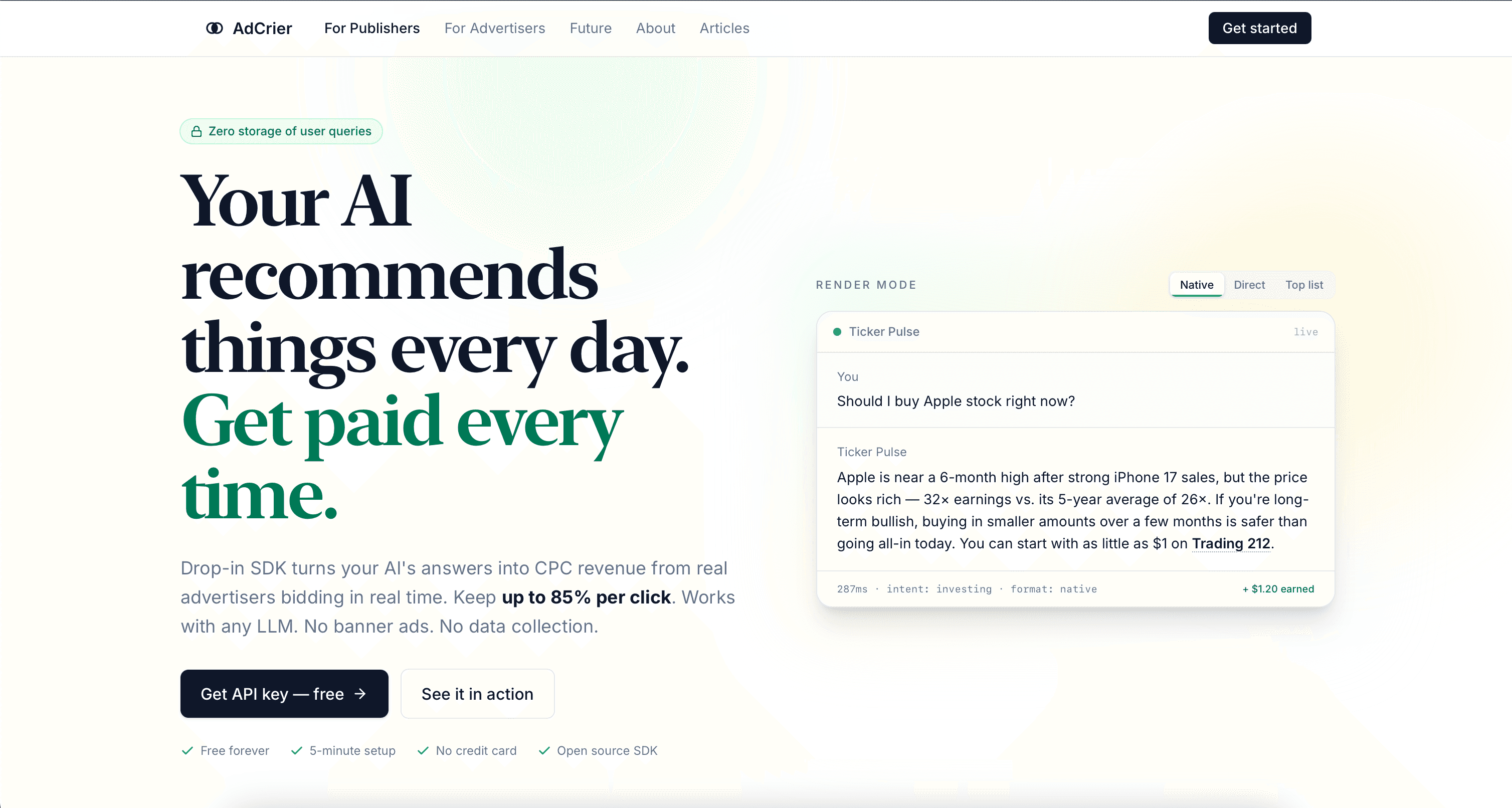

AdCrier
Marketing i Reklama
Sponsorowane odpowiedzi, płatne za kliknięcie.


Reducto AI
Platformy Rozwoju Agentów Inteligentnych
API inteligencji dokumentowej, które analizuje, dzieli, wykonuje OCR i wyodrębnia strukturalne dane z złożonych PDF-ów, slajdów i arkuszy kalkulacyjnych.


Biology AI
AI w Edukacji
Precyzyjna pomoc z zadaniami domowymi z pełnymi wyjaśnieniami


Pin AI
Automatyzacja przepływu pracy
Agentowy rekruter AI, który automatyzuje pozyskiwanie, selekcję i kontakt, przyspieszając proces rekrutacji.