OllamaVoer open-source grote taalmodellen lokaal uit op je eigen machine

Overzicht
Belangrijkste functies
- Eén-opdracht model downloaden en uitvoeren
- Lokale REST API voor app-integratie
- Modelbibliotheek met gekwantiseerde versies
- Aangepaste Modelfile voor op maat gesneden modelconfiguraties
- GPU-versnelling op ondersteunde hardware
- Werkt offline na de eerste installatie
Prijs
- Model
- Freemium
- Categorie
- Grote Taalmodellen (LLMs)
- Beoordeling
- 4.4 / 5 (5)
Toepassingen
Privé offline LLM-chat
Voer modellen zoals Llama of Mistral lokaal uit om met een AI-assistent te chatten zonder prompts of data naar externe cloudservices te sturen.
Lokale AI-app-ontwikkeling
Gebruik de lokale REST API van Ollama om open-weight LLMs te integreren in aangepaste applicaties, chatbots of interne tools tijdens prototyping en productie.
Code-assistent op je machine
Koppel Ollama met code-gerichte modellen om autocomplete, refactoring en uitleg hulp rechtstreeks op je laptop te krijgen, zelfs zonder internettoegang.
Model-experimentatie voor onderzoekers
Download, wissel en benchmark snel verschillende open modellen met aangepaste Modelfile-configuraties om prestaties te evalueren voor onderzoek of fine-tuning workflows.
Pluspunten & minpunten
Pluspunten
- Volledig lokale uitvoering houdt data privé
- Gratis en open source
- Ondersteunt veel populaire open-weight modellen
- Eenvoudige CLI en lokale API voor eenvoudige integratie
- Platformonafhankelijk (macOS, Linux, Windows)
Minpunten
- Vereist krachtige hardware voor grotere modellen
- Geen ingebouwde grafische interface standaard
- Prestaties zijn sterk afhankelijk van lokale GPU of RAM
- Beperkt tot open-weight modellen, geen propriëtaire modellen
Recensies
Gemiddelde van 5 beoordelingen.
Log in om een review te schrijven.
Years in this space
I've evaluated a lot of these over the years. What stands out here is works offline after initial setup — handled better than most — and free and open source. Requires capable hardware for larger models is my one real gripe. Worth the time if this is your use case.
Solid for our team
We rolled this out across the team last quarter and cross-platform (macOS, Linux, Windows). Works offline after initial setup fits neatly into how we already work, and works offline after initial setup removed a step we used to do by hand. No built-in graphical interface by default, which is the main caveat, but it has held up under daily use.
Years in this space
I've evaluated a lot of these over the years. What stands out here is custom Modelfile for tailored model configs — handled better than most — and cross-platform (macOS, Linux, Windows). Limited to open-weight models, not proprietary ones is my one real gripe. Worth the time if this is your use case.
Skeptical, then convinced
I went in skeptical — most tools in this space overpromise. It actually delivers on custom Modelfile for tailored model configs, and free and open source caught me off guard. No built-in graphical interface by default is why this isn't a perfect score, still, I'd recommend giving it a real trial.

Solid for our team
We rolled this out across the team last quarter and simple CLI and local API for easy integration. Local REST API for app integration fits neatly into how we already work, and works offline after initial setup removed a step we used to do by hand. but it has held up under daily use.
Vragen
How does extra usage work?
Pro and Max users can add extra usage balance. Ollama uses included plan limits first, then draws from the extra usage balance. Team usage draws from one balance shared by the organization.
Asked by Ekaterina Orlova · Aug 26, 2025
How much usage does each model use?
Models consume a different amount of usage based on how difficult they are to run. To view a model's usage level, visit the model's page, where its usage level is displayed from small, light models (level 1), like gpt-oss:20b, to extra heavy models (level 4), like deepseek-v4-pro.
Asked by Greta Nowak · Aug 21, 2025
How is usage measured?
Individual plans have usage limits based on the model and the number of input, cached input, and output tokens processed. They don't cap you at a fixed number of tokens because different models use different amounts of compute. For teams, each member's usage draws from the usage included with their seat first. Once it's used, further usage draws from the team's shared extra usage balance at the model's token rate.
Asked by Ravi Kapoor · Aug 16, 2025
What are the usage limits for each plan?
Running models on your own hardware is always unlimited. Cloud usage varies by plan: Plan Usage Example use cases Free Light usage Chatting with models, evaluating larger models, coding and AI assistants with smaller models Pro Day-to-day work Larger models, coding automation, deep research Max Heavy, sustained usage Continuous agent tasks, multiple concurrent agents, large models over extended sessions Each plan has session limits that reset every 5 hours and weekly limits that reset every 7 days.
Asked by Noor Siddiqui · Aug 12, 2025
How fast is Ollama?
Speed depends on model size, architecture, and hardware optimization. We target and monitor for low time-to-first-token and high throughput across all cloud models. Priority tiers with faster performance may be available in the future.
Asked by Constantin Ionescu · Aug 11, 2025
Stel een vraag
Alternatieven voor Grote Taalmodellen (LLMs)

Mistral AI
Grote Taalmodellen (LLMs)
Open-weight grensmodellen


Kore.ai
Grote Taalmodellen (LLMs)
Een no-code conversational AI-platform waarmee bedrijven intelligente virtuele assistenten kunnen bouwen en implementeren.


🍌 Nano Banana - Where Ideas Instantly Come to Life, The New Era of AI Image Generation
Grote Taalmodellen (LLMs)
Snelle AI-beeldgeneratie aangedreven door Google Gemini 2.5 Flash voor razendsnelle visuele prototyping.


Reka AI
Grote Taalmodellen (LLMs)
Multimodale basismodellen die tekst, afbeeldingen, video en audio begrijpen.

WebVoyager
Grote Taalmodellen (LLMs)
Een LMM-aangedreven webagent die gebruikersinstructies end-to-end voltooit door interactie met echte websites.


AI Writer
Grote Taalmodellen (LLMs)
AI-ondersteund schrijfplatform voor het genereren, onderzoeken en verfijnen van langlopende inhoud.

Cohere
Grote Taalmodellen (LLMs)
Een platform dat enterprisegerichte AI-oplossingen aanbiedt, gespecialiseerd in grote taalmodellen voor natuurlijke taalverwerking.

DeepL
Grote Taalmodellen (LLMs)
Neuraal machinaal vertaaltool bekend om nauwkeurige, natuurlijk klinkende resultaten over de belangrijkste talen.
Trending now


Reducto AI
Platformen voor ontwikkeling van AI Agents
Document intelligence-API die pdf's, Presentaties en spreadsheets analyseert, splijt en extraheren van complexe gestructureerde gegevens.
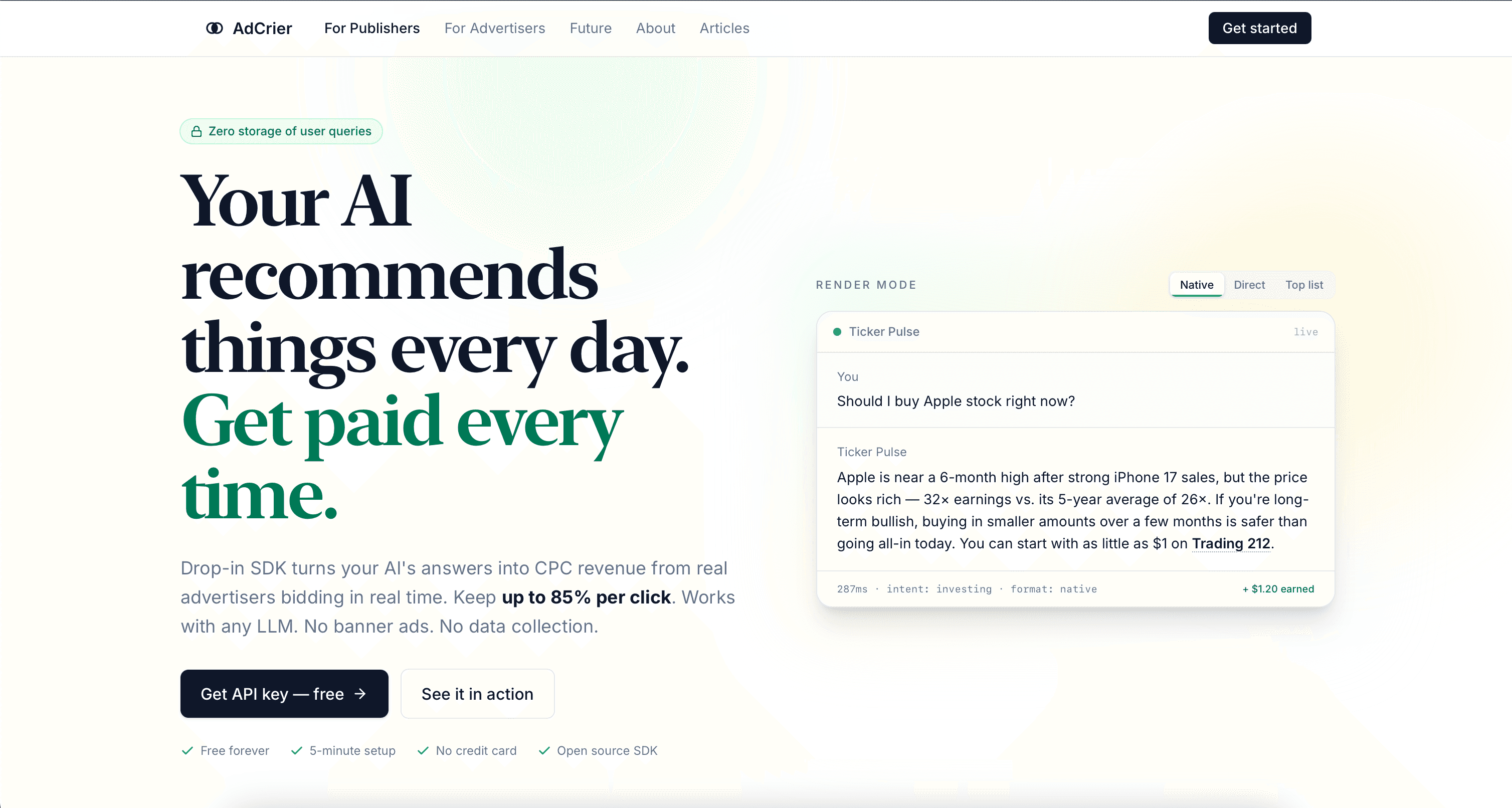

AdCrier
Marketing & Adverteren
Gesponsorde antwoorden, betaald per klik.


Biology AI
Onderwijs AI
Nauwkeurige Huiswerkhulp met Volledige Uitleg
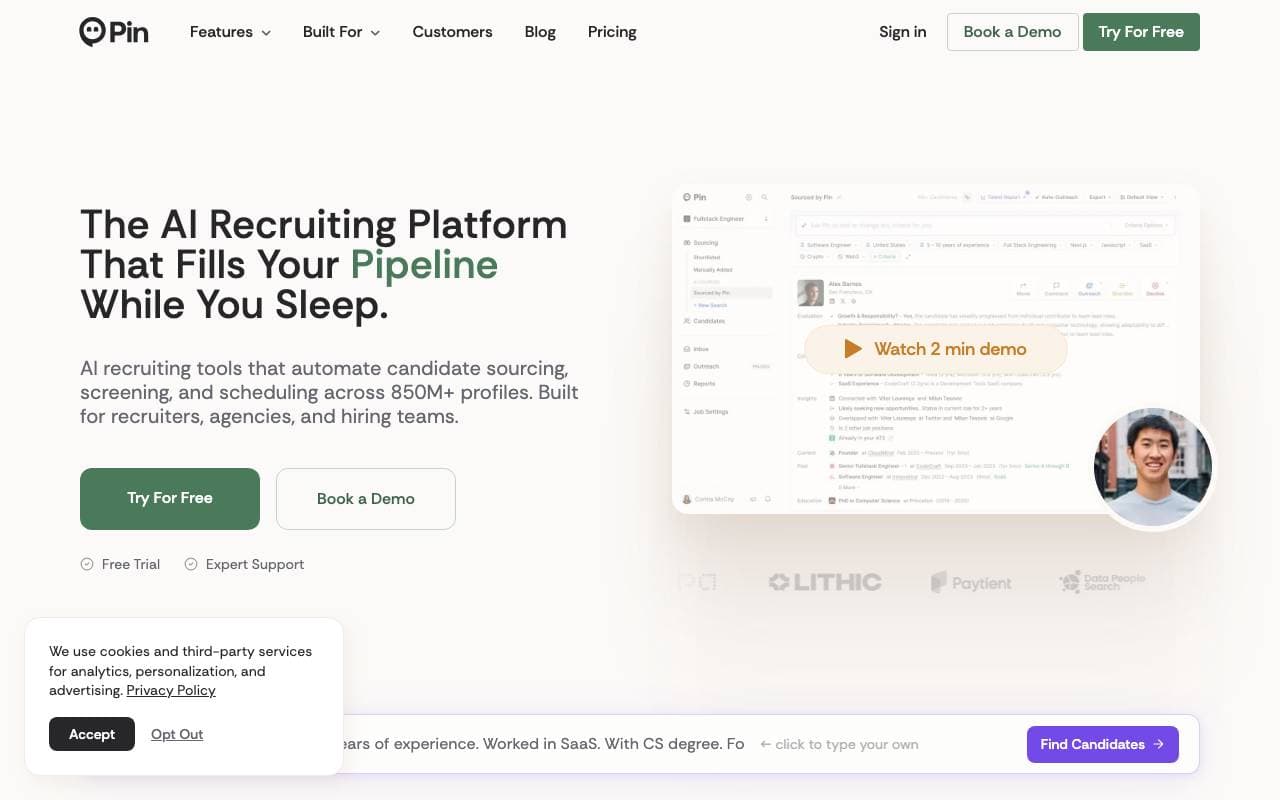

Pin AI
Werkstroom automatisering
AI-recruiter die sourcing, screening en outreach automatiseert om het inhuren te versnellen.