
BasedAIGedecentraliseerd AI-netwerk dat homomorfe encryptie combineert met grote taalmodellen voor privé-inferentie.

Overzicht
Belangrijkste functies
- Homomorfe encryptie voor prompts en outputs
- Gedecentraliseerd LLM-inferentie netwerk
- On-chain incentives voor knooppuntoperators
- Privacy-behoudende API-toegang
- Gedistribueerde compute over onafhankelijke knooppunten
- Ondersteuning voor vertrouwelijke AI-toepassingen
Prijs
- Model
- Free
- Categorie
- WEB 3.0
- Beoordeling
- 4.3 / 5 (4)
Toepassingen
Privé Data Analyse
Onderzoeksinstituten en organisaties kunnen BasedAI gebruiken voor vertrouwelijke data-analyse en modellering zonder gevoelige informatie in gevaar te brengen.
Gedecentraliseerde Inhoudsgeneratie
Inhoudscreators kunnen gebruikmaken van de gedecentraliseerde infrastructuur van BasedAI voor het genereren van content terwijl intellectueel eigendom behouden blijft en gebruikersanonymiteit wordt gehandhaafd.
Pluspunten & minpunten
Pluspunten
- Einde-naar-einde privé-inferentie via homomorfe encryptie
- Gedecentraliseerde infrastructuur vermindert single points of failure
- Open deelname voor knooppuntoperators
- Geschikt voor gevoelige of gereguleerde dataworkflows
Minpunten
- FHE voegt aanzienlijke latency toe versus standaard inferentie
- Kleiner ecosysteem dan gecentraliseerde AI-voorzieners
- Token-gebaseerde economie kan onboarding ingewikkelder maken
- Modelselectie beperkter dan bij mainstream APIs
Recensies
Gemiddelde van 4 beoordelingen.
Log in om een review te schrijven.

Solid for our team
We rolled this out across the team last quarter and suited for sensitive or regulated data workflows. Homomorphic encryption for prompts and outputs fits neatly into how we already work, and decentralized LLM inference network removed a step we used to do by hand. FHE adds significant latency versus standard inference, which is the main caveat, but it has held up under daily use.

Does the job
Pretty happy overall. On-chain incentives for node operators just works and open participation for node operators. Smaller ecosystem than centralized AI providers can be annoying, but no dealbreakers — I'd recommend it to a friend without hesitating.

Years in this space
I've evaluated a lot of these over the years. What stands out here is support for confidential AI applications — handled better than most — and end-to-end private inference via homomorphic encryption. Worth the time if this is your use case.
Skeptical, then convinced
I went in skeptical — most tools in this space overpromise. It actually delivers on on-chain incentives for node operators, and end-to-end private inference via homomorphic encryption caught me off guard. FHE adds significant latency versus standard inference is why this isn't a perfect score, still, I'd recommend giving it a real trial.
Vragen
Are there any barriers to getting started as a node operator or user?
Participation relies on on‑chain token incentives, which can add complexity to onboarding for users unfamiliar with blockchain economics, and the smaller ecosystem may require additional effort to select and configure suitable models.
Asked by George Papadakis · Aug 30, 2025
What integration options does BasedAI provide for developers?
BasedAI offers a privacy‑preserving API that lets developers deploy or access encrypted model endpoints, enabling straightforward integration into existing applications while keeping prompts and outputs hidden from compute nodes.
Asked by Jana Krejčí · Aug 27, 2025
How does the homomorphic encryption affect inference speed compared to traditional APIs?
Because fully homomorphic encryption (FHE) must encrypt and decrypt data before and after computation, latency is significantly higher than standard, non‑encrypted inference, making real‑time responsiveness a limitation for some use cases.
Asked by Wolfgang Krause · Aug 21, 2025
What types of applications are best suited for BasedAI's privacy-preserving inference?
BasedAI excels in scenarios that require confidentiality, censorship resistance, or data sovereignty, such as enterprise document analysis, sensitive chat applications, and workflows in regulated industries where prompt and output privacy is critical.
Asked by Julia Steiner · Aug 15, 2025
Stel een vraag
Alternatieven voor WEB 3.0


SingularityNET
WEB 3.0
Een gedecentraliseerd platform dat de creatie, delen en monetarisatie van AI-diensten mogelijk maakt.


Zerebro
WEB 3.0
Autonome AI-agent voor crypto-natuurlijk content creëren en on-chain distributie


GAME by Virtuals
WEB 3.0
Autonome besluitvormingsmotor die on‑chain AI‑agents aandrijft


Download From Pinterest
WEB 3.0
Gratis webtool om Pinterest‑video’s, afbeeldingen en GIF’s met een paar klikken op te slaan.

Stephen Quant
WEB 3.0
AI-assistent voor technische analyse van crypto en het ontdekken van handelsopstellingen


Wallet Finder AI
WEB 3.0
Volg en kopieer realtime transacties van de meest winstgevende DeFi-portemonnees.
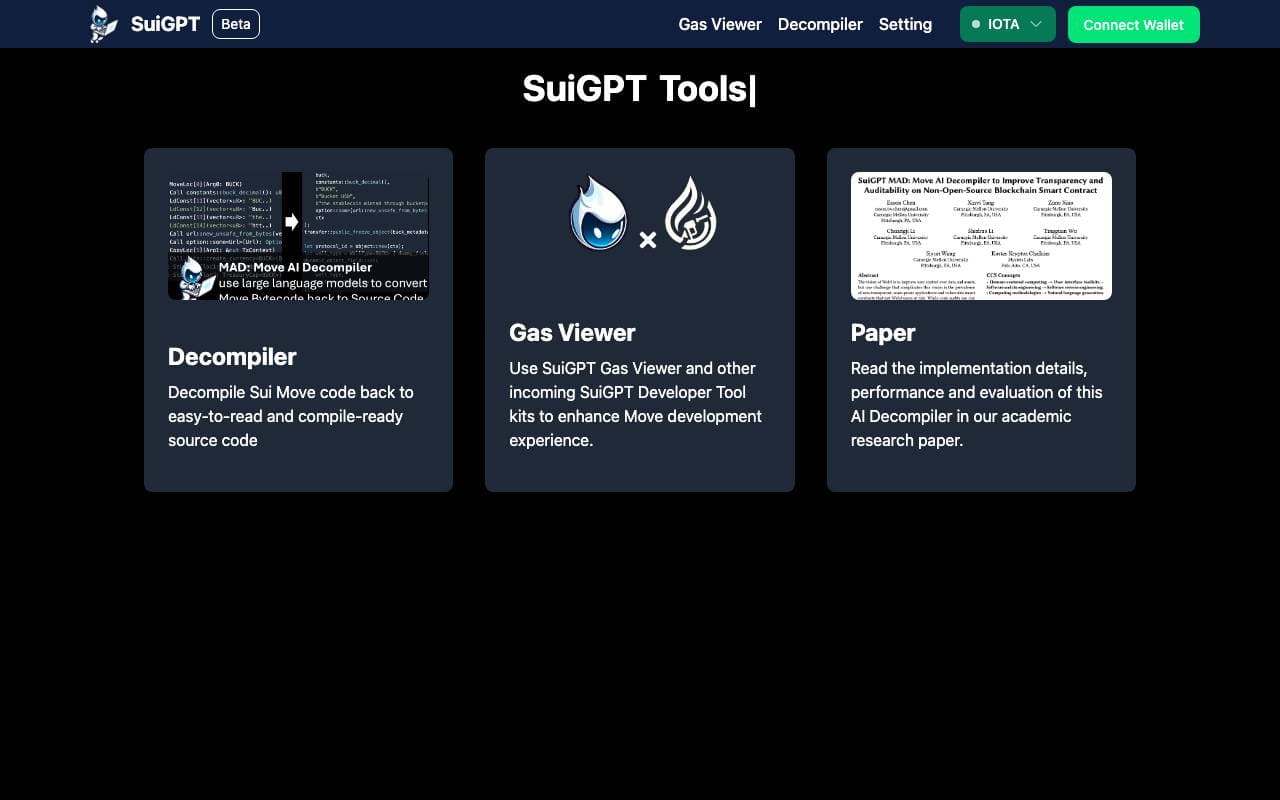

SuiGPT
WEB 3.0
LLM-gepowered decompiler en beautifier voor Sui Move smart contracts.


RZLT
WEB 3.0
Web3-groeihub dat crypto- en blockchain-projecten helpt om gemeenschap, marketing, en gebruikersacquisitie te schalen.
Trending now


Reducto AI
Platformen voor ontwikkeling van AI Agents
Document intelligence-API die pdf's, Presentaties en spreadsheets analyseert, splijt en extraheren van complexe gestructureerde gegevens.
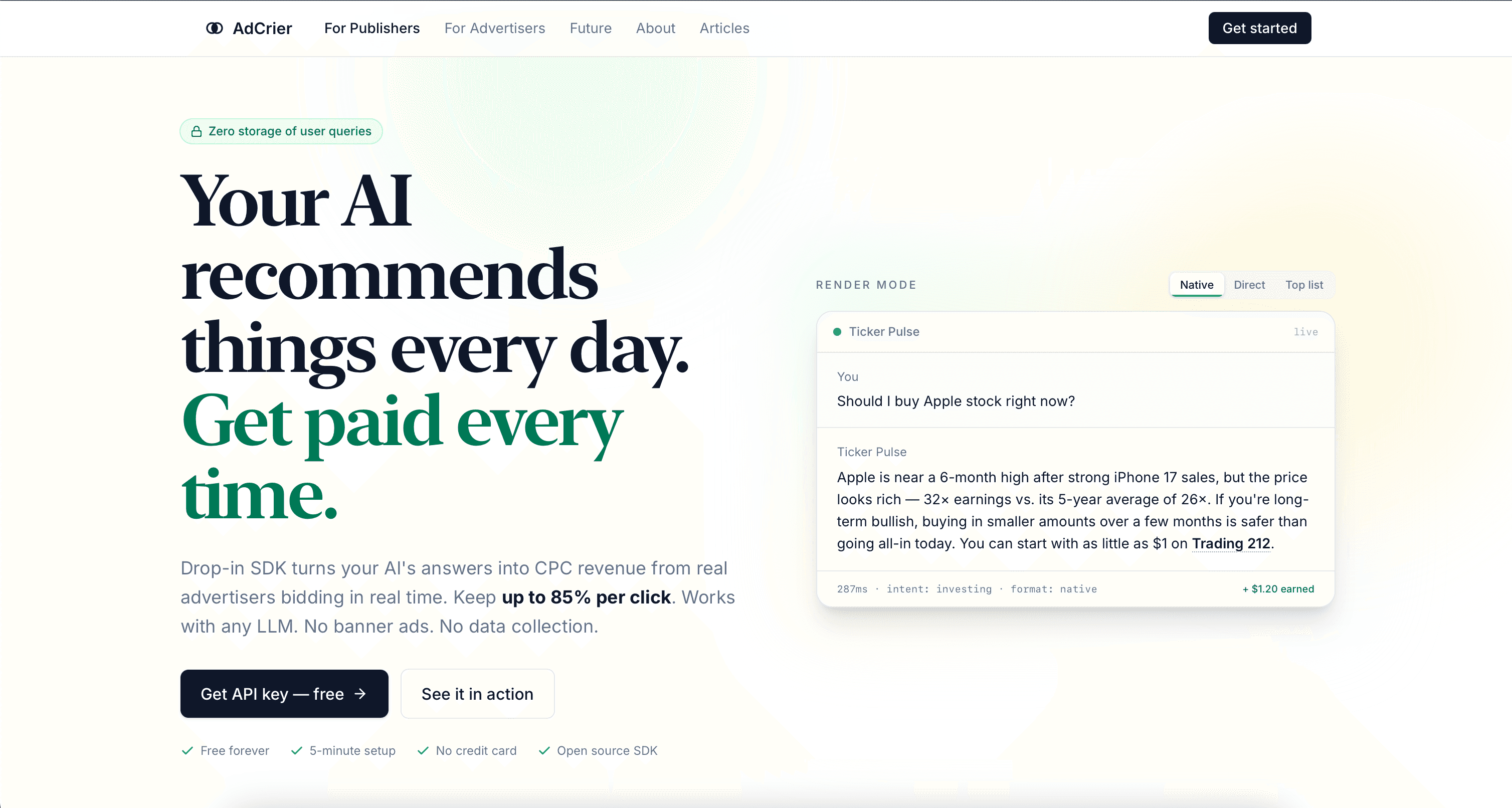

AdCrier
Marketing & Adverteren
Gesponsorde antwoorden, betaald per klik.


Biology AI
Onderwijs AI
Nauwkeurige Huiswerkhulp met Volledige Uitleg


Pin AI
Werkstroom automatisering
AI-recruiter die sourcing, screening en outreach automatiseert om het inhuren te versnellen.