
Review Pr (Grade A)Turvatud andme-ai oskus Claudel AI-le. A-klassi hinne. Vaata üle PR või haru erinevus, kasutades teadmiste graafi kogu struktuurilise konteksti jaoks. Väljasta struktureeritud ülevaade koos plahvatusohtliku raadiusega analüüsiga.

Ülevaade
Põhifunktsioonid
- PR või haru erinevuse ülevaade
- Teadmiste graafi integreerimine
- Struktureeritud ülevaade väljund
- Plahvatusohtliku raadiusega analüüs
- Testi katvuse kontrollimine
Hinnad
- Mudel
- Free
- Kategooria
- Tosed
- Hinnang
- Arvustusi pole
Kasutusjuhud
Koodi ülevaade
Teosta põhjalik koodi ülevaade pull-taotluse või haru erinevuse kohta.
Riskihindamine
Tuvasta kõrge riskiga piirkondi ja hinda üldist riski PR või haru erinevuse kohta.
Plussid ja miinused
Plussid
- Põhjalik koodi ülevaade
- Plahvatusohtliku raadiusega analüüs
- Testi katvuse kontrollimine
Miinused
- Piiratud Claudel AI-ga
- Nõuab git ja teadmiste graafi seadistamist
Arvustused
Logi sisse arvustuse jätmiseks.
Arvustusi pole. Ole esimene!
Küsimused
How does it handle monorepos, git worktrees, and multiple repos?
Monorepos: one graph per repository root is created automatically; only tracked files are indexed, and a .code-review-graphignore file can exclude additional paths. Git worktrees: each worktree is detected as a separate root and gets its own graph; sharing a single database across worktrees at different commits is not supported. Multiple repos: a lightweight registry (stored at ~/.code-review-graph/registry.json) lets MCP clients search across registered projects, and a daemon can watch several repos to keep their graphs updated. Use --repo, --data-dir, or the CRGDATADIR environment variable to customize locations.
Asked by Jana Krejčí · Dec 28, 2025
How big a codebase justifies it?
Below a few hundred files the benefit is marginal because an agent can often hold the whole repo in context. Between a few hundred and a few thousand files is the sweet spot: benchmarks on repos ranging from 60 to ~1,100 files show 38×–528× token reductions on whole‑corpus questions. Multi‑thousand‑file repos and monorepos provide the strongest case, as agents cannot read the entire corpus per query and incremental graph updates keep the index fresh with minimal cost. The frequency of multi‑file queries also influences the payoff.
Asked by Wolfgang Krause · Dec 8, 2025
How do I verify it is working?
1. Ensure the graph file exists and contains nodes/edges; a zero count means the build didn’t run. 2. Run a change and observe the risk summary and Token Savings panel; add --verify to cross‑check token estimates with the cl100kbase tokenizer. 3. In Claude Code, run /mcp and confirm the code‑review‑graph server is connected and its tools are listed. Then ask a structural question (e.g., "what calls parsefile?") and verify the assistant uses query_graph instead of grepping. If any step fails, consult TROUBLESHOOTING.md.
Asked by Elena Rossi · Nov 18, 2025
Does it phone home?
No. There is zero telemetry. The graph is stored locally in a SQLite file inside your repository, and all core operations run entirely on your machine. The only network activity is optional: installing the embeddings extra will download a sentence‑transformers model from HuggingFace, and cloud embedding providers (OpenAI, Google Gemini, MiniMax) will receive only the function signatures you explicitly choose to embed, after you acknowledge the egress warning. Otherwise, your code never leaves the machine.
Asked by Lindiwe Mahlangu · Nov 16, 2025
When should I not use it?
The README lists several cases: very small repos (a few hundred files) where the overhead of building a graph outweighs the benefits; trivial single‑file changes where the graph response adds more tokens than the raw diff; one‑off questions on a repo you won’t revisit; and flow detection in languages where CRG’s entry‑point detection is less reliable (e.g., JavaScript and Go currently have low recall). In these scenarios, simple agentic search or grepping is usually sufficient.
Asked by Mia Andersen · Nov 12, 2025
Esita küsimus
Tosed alternatiivid

 Manage Headers (Grade A)Tosed
Tekkivad probleemid pole ajaga

 Using Git Worktrees (Grade A)Tosed
Teknikas kvaliteediteestlised ehitammete ühendus (klauzuli A)

 Ga4 Bigquery Schema (Grade A)Tosed
Turvalisuse poolt testitud andme‑AI oskus Claude AI jaoks. Hinne A. GA4 BigQuery eksportimise skeemi viide — täielik väljade viide, pesastatud struktuurid, päringu mustrid ja jõudlusnäpunäited

 Meta Capi (Grade A)Tosed
Tegelikult turulookijaid ja struktuuride analüüsi rakendamine

 Callees (Grade A)Tosed
Turvaliselt testitud arendusoskus Claude AI-s. Tase A. Näitab, mida funktsioon/metood kutsub (otse kutsegraafik)

 Test Module Name (Grade A)Tosed
Vali antekstide analüüsi ja turvalisus standardseid

 Board Of Directors (Grade A)Tosed
Turvaliselt testitud andme-AI oskus Claude AI jaoks. Grade A. Simuleeri 5-liikmelise ekspertboardi arutelu suurte otsuste jaoks. Kasuta, kui hindad plaane, arhitektuurivalikuid, funktsioonide kujundusi või muid otsuseid

 Advpl Mvc Avancado (Grade A)Tosed
Turvatud arendusoskus Claudel AI jaoks. Grade A. Täiustatud MVC PE kaudu (sisenemispunktid) — lisa kohandatud ruudud standardsetele MVC ekraanidele (CNTA300/MATA070/MATA440/MATA460/FINA040 via *STRU)
Trending now

 Reducto AIAI Agentide Arendusplatvormid
Dokumentide intelligentsuse API, mis parsee, lõikab, OCRib ja ekstraheerib struktureeritud andmeid keerukatest PDF-failidest, slaididest ja tabelitest.
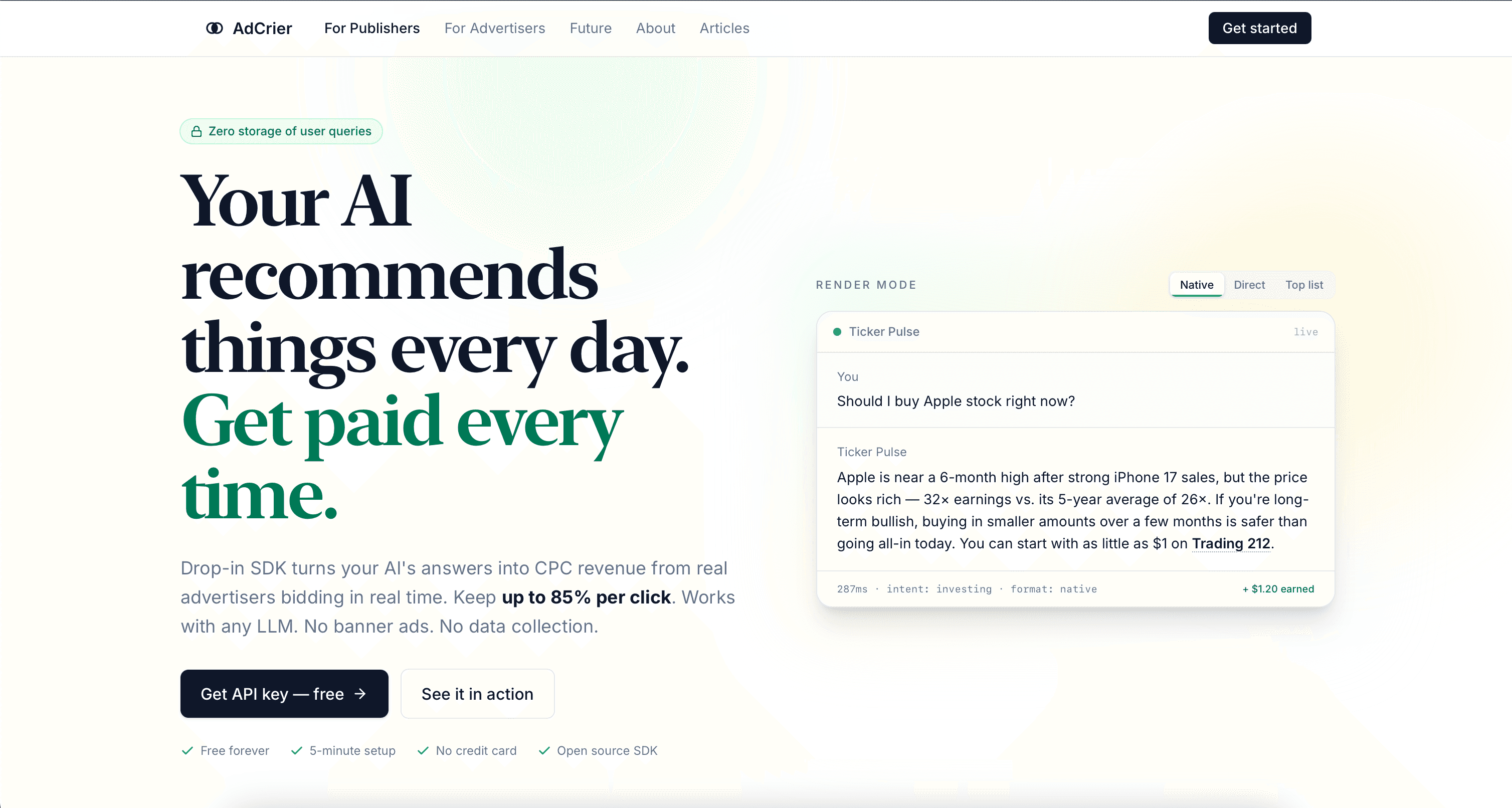
 AdCrierTurundus & Reklam
Sponsoreeritud vastused, makstakse klikkide eest.

 Biology AIHaridustehnoloogia
Täpne kodutööabi täielike selgitustega

 Pixtral 12B 24.09Loogiline Mõtestav Model
Pixtral 12B model, piisaväline endavastav interiga/pildi ja teksti kohta