
Cloud Iam Deep (Grade A)Turve testitud turvatestimise oskus Claude AI jaoks. Tase A. Cloud IAM red-teami rünnakujada AWS, Azure ja GCP – keskendub välistele eksploitatsiooniteedidele ja post-kredentiaalide avastamise privileegidele.

Ülevaade
Põhifunktsioonid
- IAM enumeratsioon AWS, Azure ja GCP jaoks
- STS/AssumeRole jadas ja Azure Managed Identity kasutamine
- GCP teenuse konto JSON kasutamine ja IMDSv1/v2 rünnakud
- K8s ServiceAccount token privilege analüüs ja role-trust-policy confused-deputy
- Konto vaheline assume-role enumeratsioon ja IAM privilegeerimise tõstmise mustrid
- AWS Cognito Identity Pool autentimata rolli rünnakujada
Hinnad
- Mudel
- Free
- Kategooria
- Tosed
- Hinnang
- Arvustusi pole
Kasutusjuhud
Pilvekrediendi pinda
Kasutage, kui pilvekrediens ilmub, näiteks võti, salajane, token või JSON fail, ja peate kindlaks määrama, mida see annab ja kuidas privileege tõsta.
Post-RCE pööramine
Kasutage pärast kaugkoodi käivitamise (RCE) rünnakut pilvehostitud instantsi peal, et pöörata pilve juhtimiskeskkonda.
Plussid ja miinused
Plussid
- Üle mitme pilveplatvormi ulatuv IAM enumeratsiooni ja privileegide tõstmise katvus
- Keskendumine välistele eksploitatsiooniteedidele ja post-kredentiaalide avastamise privileeganalüüsile
- Sisaldab tööriistu ja tehnikaid pilvekredentiaalide tuvastamiseks ja nende väärkasutamiseks
Miinused
- Piiratud välistele eksploitatsiooniteedidele ja ei pruugi katta sisemisi ohte
- Vajalik on olemasolev pilve turbe ja IAM kontseptsioonide teadmine
- Ei pruugi sobida kohapealsetele või pilvevälistele turvatestidele
Arvustused
Logi sisse arvustuse jätmiseks.
Arvustusi pole. Ole esimene!
Küsimused
Why this exists?
Most bug‑hunting Claude setups are either too generic (one big "security" prompt) or too fragmented (you bookmark 30 disclosed reports and re‑read them every engagement). Neither scales past the second target. This bundle was built and validated through authorized engagements that exposed different capability gaps: Bug‑bounty engagement — surfaced four gaps a starter 3‑skill stack could not close: 1. No hypothesis discipline — drafts written before validation → wasted hours, hurt validity ratio 2. No per‑program reporting tactics — VRT defaults auto‑downgraded P3‑worthy findings to P4 3. No engagement coordination — findings, evidence, and submission IDs scattered across folders 4. No evidence hygiene — screenshots leaked cookies and victim PII External red‑team engagement — exposed five additional gaps that bug‑bounty defaults made worse: 1. Conservative defaults retracted real findings — WAPT mindset stopped tests early on defended targets where red‑team continuation would have surfaced bypass chains → redteam‑mindset 2. No mid‑engagement situational awareness — client SOC patched confirmed SQLi within 30 min; external attacker locked 14 accounts during a live test session — both invisible without explicit detection methodology → mid‑engagement‑ir‑detection 3. No enterprise‑platform attack chains — M365 + Entra ID, on‑prem SharePoint, Cisco SSL VPN, vCenter, and 7 Android APKs all needed current 2024‑2026 CVE knowledge and platform‑specific tradecraft → m365‑entra‑attack, .
Asked by Zelda Brandt · Sep 4, 2025
Why your model switched mid‑session?
Separate from refusals, and easy to miss. On Opus 5, a narrow set of higher‑risk cyber requests — Anthropic names exploit generation, binary‑based vulnerability scanning and penetration testing — fall back to Opus 4.8 rather than being refused. You get a notice and the response is labelled with the model that answered, but in a long agentic run that is easy to scroll past, so it can look like Opus 5 quietly got worse. See why Claude switched models. What to do depends on what you are actually doing: | Situation | What helps | |---|---| | Auditing your own code — reviewing a repo you own for defects | Say so. "Defensive review of my own repo", "check this against the OWASP Top 10", "secure refactor to remediate" describe the work accurately and read as remediation. | | Authorized offensive work — live engagement, PoC for a bounty submission | This is what the bundle is for, and the supported route is CVP. Do not reword an offensive engagement to look defensive to get past a classifier — enroll instead. | | You just want the switching off | Settings → Capabilities disables automatic model switching. | /hunt states the engagement frame (authorized, scope‑bounded, remediable finding) on its first turn for exactly this reason — engagement context belongs in the session explicitly, not implied.
Asked by Anders Lindgren · Aug 28, 2025
How it works?
A 6‑phase, non‑linear workflow — recon → map & rank → hunt → validate → report — with scope enforced in code and a 7‑Question Gate before anything is submitted. Two ways to drive it: Plain English — describe what you're testing and the relevant skill loads automatically. /hunt scaffold + cbh CLI — engagement‑folder structure, state, and orchestration. Includes a usage guide, worked example, 6‑phase architecture diagram, and the cbh CLI.
Asked by Frank Müller · Aug 16, 2025
What's inside?
82 skills, auto‑loaded by topic — no invocation by name. Coverage across the external attack surface: | Category | # | Examples | |---|---|---| | Web application hunting | 13 | XSS, SQLi, SSRF, IDOR, LFI, SSTI, XXE, CSRF, CORS, open‑redirect | | Authentication & identity | 7 | auth‑bypass, session, OAuth, SAML, MFA‑bypass, ATO | | API & infrastructure | 15 | GraphQL, gRPC, WebSocket, API‑misconfig, host‑header, RCE | | Advanced & concurrency | 6 | race‑condition, HTTP smuggling, deserialization, cache‑poison | | Framework‑specific | 4 | Next.js, Node.js, Laravel, Spring Boot | | Enterprise identity & cloud ★ | 3 | M365/Entra, Okta, cloud‑IAM‑deep | | Infrastructure & appliance ★ | 4 | VMware vCenter, enterprise VPN, SharePoint, ASP.NET/NTLM | | Red‑team tradecraft ★ | 4 | redteam‑mindset, APK pipeline, supply‑chain recon, mid‑engagement IR | | Recon & OSINT | 4 | web2‑recon, offensive‑osint, subdomain | | Workflow, reporting & specialized | 11 | methodology, triage‑validation, evidence‑hygiene, VRT‑aware reporting | Full searchable catalog → docs/skills.md. Also ships 15 slash commands (/hunt, /recon, /report, …) and a deterministic engagement engine (engine/) that maps a target's attack surface and routes each finding to the skill that handles it.
Asked by Carmela Esposito · Aug 12, 2025
What is this?
claude-bughunter is a drop-in skill bundle for the Claude Code skills system. Install once and Claude Code stops being a chatbot and starts behaving like a senior bug‑hunting researcher or red‑team operator: it knows the techniques, the chain templates, the VRT mappings, the platform CVE chains, and the hygiene — and it stays in scope. Four layers stack: Think — bb‑methodology + redteam‑mindset: the 5‑phase non‑linear workflow, critical‑thinking framework, and red‑team operator discipline. Hunt webapps — 48 hunt‑skills curated from 681 disclosed HackerOne reports: per‑class detection patterns, payloads, bypass tables, and chain templates. Hit the perimeter — enterprise platform chains (M365/Entra, Okta, vCenter, SSL‑VPN appliances, SharePoint, cloud IAM): current 2024–2026 CVE chains + post‑credential escalation. Ship it — triage‑validation + reporting + evidence‑hygiene: the 7‑Question Gate, VRT‑aware severity, OOS rebuttals, PII redaction, and red‑team deliverables. All triggered automatically by topic — describe what you're testing in plain English and the relevant skill loads. No invocation by name.
Asked by George Papadakis · Aug 10, 2025
Esita küsimus
Tosed alternatiivid

 Manage Headers (Grade A)Tosed
Tekkivad probleemid pole ajaga

 Using Git Worktrees (Grade A)Tosed
Teknikas kvaliteediteestlised ehitammete ühendus (klauzuli A)

 Ga4 Bigquery Schema (Grade A)Tosed
Turvalisuse poolt testitud andme‑AI oskus Claude AI jaoks. Hinne A. GA4 BigQuery eksportimise skeemi viide — täielik väljade viide, pesastatud struktuurid, päringu mustrid ja jõudlusnäpunäited

 Meta Capi (Grade A)Tosed
Tegelikult turulookijaid ja struktuuride analüüsi rakendamine

 Callees (Grade A)Tosed
Turvaliselt testitud arendusoskus Claude AI-s. Tase A. Näitab, mida funktsioon/metood kutsub (otse kutsegraafik)

 Test Module Name (Grade A)Tosed
Vali antekstide analüüsi ja turvalisus standardseid

 Board Of Directors (Grade A)Tosed
Turvaliselt testitud andme-AI oskus Claude AI jaoks. Grade A. Simuleeri 5-liikmelise ekspertboardi arutelu suurte otsuste jaoks. Kasuta, kui hindad plaane, arhitektuurivalikuid, funktsioonide kujundusi või muid otsuseid

 Advpl Mvc Avancado (Grade A)Tosed
Turvatud arendusoskus Claudel AI jaoks. Grade A. Täiustatud MVC PE kaudu (sisenemispunktid) — lisa kohandatud ruudud standardsetele MVC ekraanidele (CNTA300/MATA070/MATA440/MATA460/FINA040 via *STRU)
Trending now

 Reducto AIAI Agentide Arendusplatvormid
Dokumentide intelligentsuse API, mis parsee, lõikab, OCRib ja ekstraheerib struktureeritud andmeid keerukatest PDF-failidest, slaididest ja tabelitest.
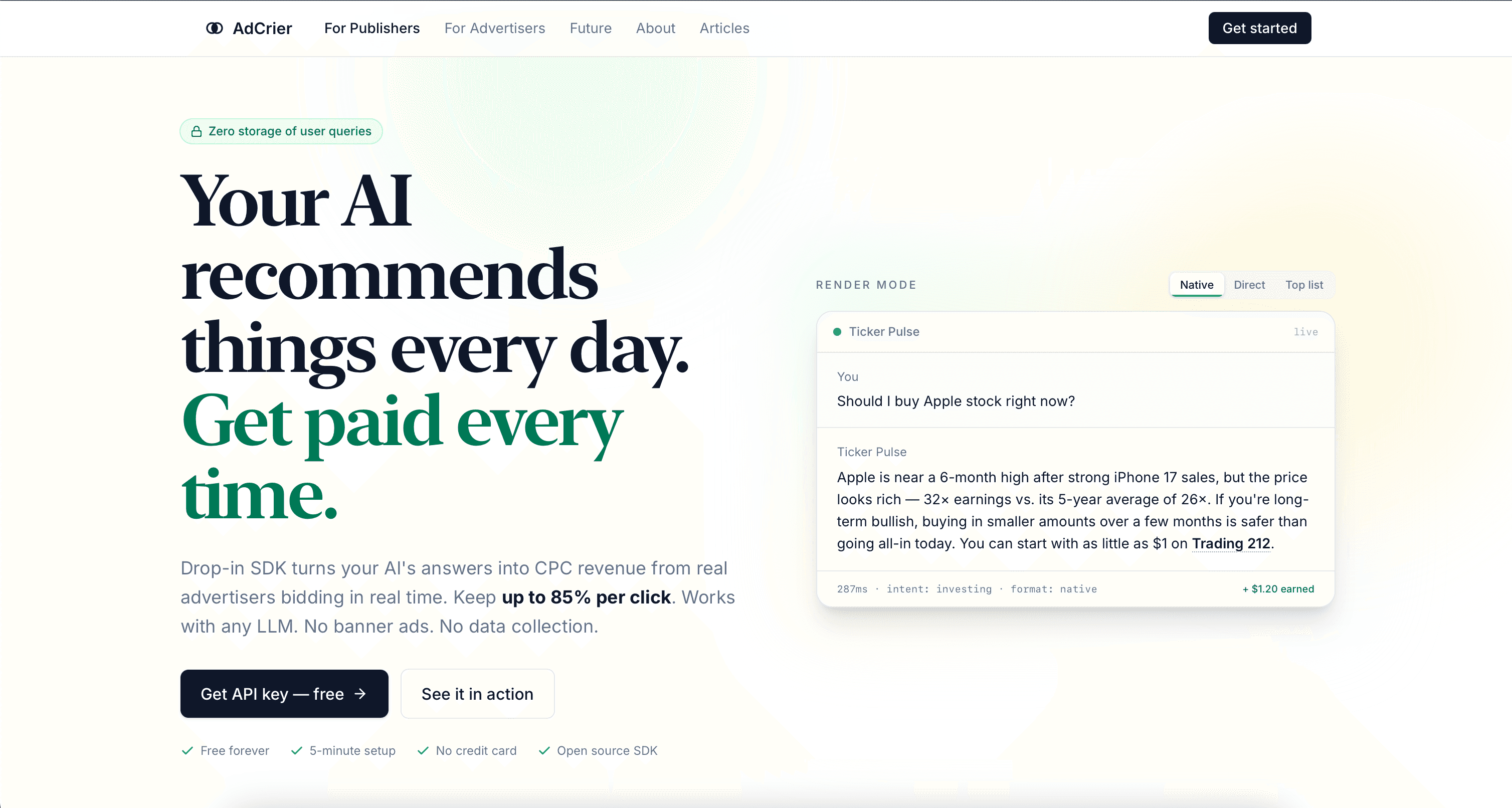
 AdCrierTurundus & Reklam
Sponsoreeritud vastused, makstakse klikkide eest.

 Biology AIHaridustehnoloogia
Täpne kodutööabi täielike selgitustega

 Pixtral 12B 24.09Loogiline Mõtestav Model
Pixtral 12B model, piisaväline endavastav interiga/pildi ja teksti kohta