
MemGPTFramework, das LLMs langfristiges Gedächtnis und selbstverwalteten Kontext über feste Token‑Limits hinaus bietet

Übersicht
Hauptfunktionen
- Gestaffeltes Kontext- und externes Speicher‑Management
- Selbstbearbeitung des Kern‑Speichers über Funktionsaufrufe
- Archiv‑ und Abruf‑Speicher
- Integration von Vektordatenbanken für die Abruffunktion
- Unterstützung mehrerer LLM‑Backends
- Zustandsbehaftete Konversationsagenten
Preise
- Modell
- Freemium
- Kategorie
- Agentenentwicklung
- Bewertung
- 4.5 / 5 (4)
Anwendungsfälle
Persistente Konversationsagenten
Entwickeln Sie Chatbots, die Benutzerpräferenzen, vergangene Gespräche und Kontext über Sitzungen hinweg erinnern, um personalisierte und kohärente Langzeitinteraktionen zu ermöglichen.
Dokumenten‑Analyse über Kontextgrenzen hinaus
Verarbeiten und schlussfolgern über große Dokumente oder Codebasen, die das native Kontextfenster eines LLMs überschreiten, indem selbstverwaltete Speicherhierarchien genutzt werden.
Autonome KI‑Assistenten
Entwickeln Sie KI‑Agenten, die ihr sich entwickelndes Wissen beibehalten und ihr Gedächtnis im Laufe der Zeit selbst bearbeiten, geeignet für fortlaufende Aufgaben wie Forschungsunterstützung oder Projektverfolgung.
Individuelle LLM‑Anwendungen
Integrieren Sie MemGPT in Entwickler‑Workflows, um jedes LLM mit virtuellem Speicher‑Management für leistungsfähigere, zustandsbehaftete KI‑Anwendungen zu erweitern.
Pro & Contra
Pro
- Persistentes Langzeit‑Gedächtnis über Sitzungen hinweg
- Betriebssysteminspiriertes gestaffeltes Speicher‑Management
- Kompatibel mit API‑basierten und lokalen LLMs
- Open Source mit aktivem Forschungskontext
Contra
- Verlässt sich auf die Zuverlässigkeit der Funktionsaufrufe des Modells
- Speichervorgänge erhöhen Latenz und Token‑Overhead
- Entwickelndes Projekt mit wechselnden Benennungen und APIs
Schlacht-Bilanz
Aus 1 Schlacht im Pantheon.
Last battle
Bewertungen
Durchschnitt aus 4 Bewertungen.
Melde dich an, um eine Bewertung abzugeben.
Solid for our team
We rolled this out across the team last quarter and it saves real time. The core workflow fits neatly into how we already work, and the integrations removed a step we used to do by hand. but it has held up under daily use.

Use it every day
Honestly didn't expect to like it this much. The onboarding is exactly what I needed, and it is genuinely easy to set up. I do wish the mobile experience lags, but I reach for it almost every day now and it just clicks.
Use it every day
Honestly didn't expect to like it this much. The automation is exactly what I needed, and support is responsive. I do wish the docs could be deeper, but I reach for it almost every day now and it just clicks.
Solid for our team
We rolled this out across the team last quarter and it is genuinely easy to set up. The core workflow fits neatly into how we already work, and the API removed a step we used to do by hand. The docs could be deeper, which is the main caveat, but it has held up under daily use.
Fragen & Antworten
What are the performance trade‑offs of using MemGPT's memory system?
Memory operations introduce extra latency and token overhead because the model must issue function calls to move data between tiers, and the approach depends on the model's reliability in handling those calls.
Asked by Rasheed Osman · Mar 3, 2026
What integrations does MemGPT provide for retrieving stored information?
MemGPT can hook into vector databases for efficient similarity search, allowing the LLM to retrieve relevant archived memory during a conversation.
Asked by Anya Sokolova · Feb 14, 2026
Can MemGPT work with both API‑based and locally hosted language models?
Yes, the framework supports multiple LLM backends, so you can integrate it with cloud APIs or run it alongside local models without changing the core memory management logic.
Asked by Diego Fernández · Jan 21, 2026
How does MemGPT handle memory beyond the LLM's fixed token window?
MemGPT uses an OS‑inspired tiered system that separates in‑context tokens from external storage. The model can call functions to page data in and out, storing important facts in long‑term memory and retrieving them as needed.
Asked by Carmela Esposito · Jan 11, 2026
Frage stellen
Alternativen zu Agentenentwicklung
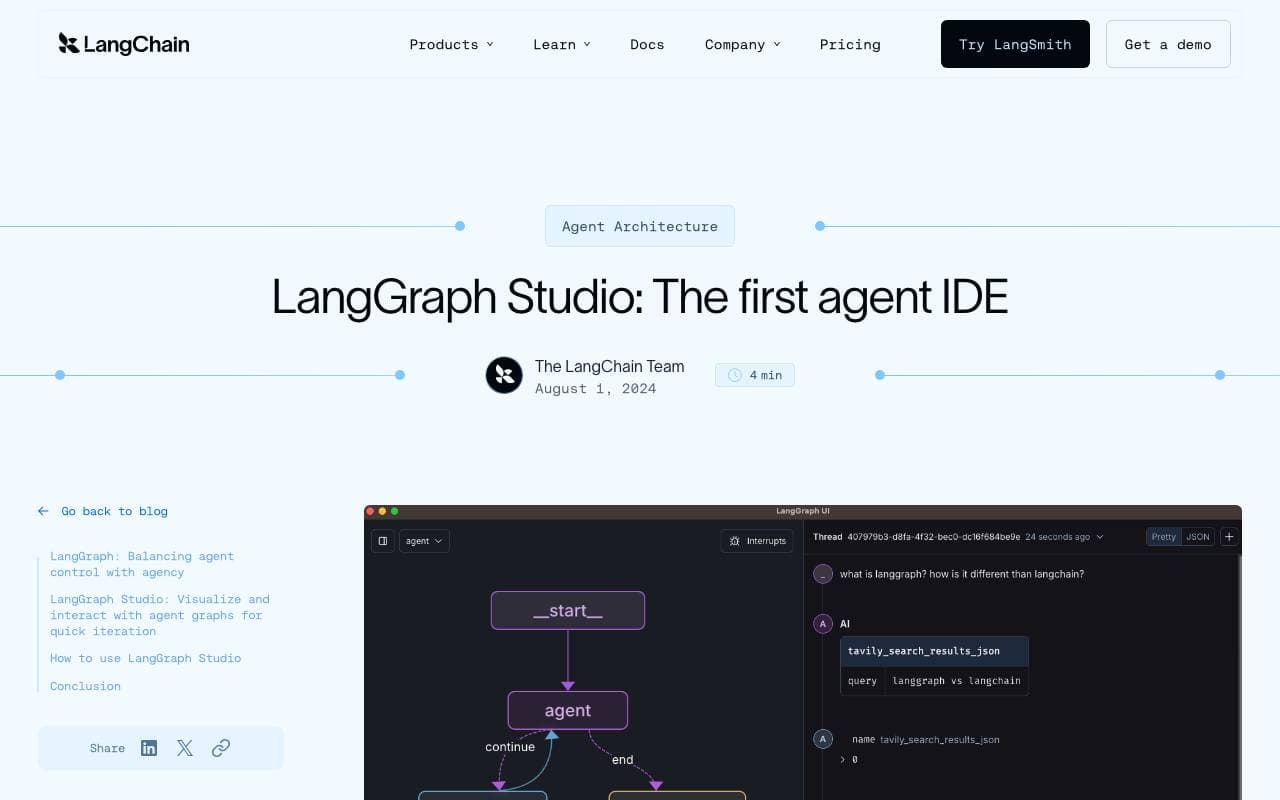

LangGraph Studio
Agentenentwicklung
Visuelles IDE zum Erstellen, Debuggen und Untersuchen von LangGraph-Agent-Workflows


BrainSoup
Agentenentwicklung
Erstellen Sie benutzerdefinierte AI-Agenten, um Aufgaben und Workflows über natürliche Sprache zu automatisieren.


Letta AI
Agentenentwicklung
Eine Open-Source-Plattform zum Erstellen zustandsbasierter AI-Agenten mit Langzeitgedächtnis und fortgeschrittener Logik.


Snorkel Flow
Agentenentwicklung
Plattform für programmatische Datenetikettierung und AI-Entwicklung für schnelles Bauen von Produktionsmodellen.

NetX
Agentenentwicklung
Modulares Wirtschaftsnetzwerk, das Blockchain-Infrastruktur mit KI-Fähigkeiten vereint.


Theoriq AI
Agentenentwicklung
Dezentraler Protokoll für das Aufbauen und Regieren von multi-agenten KI-Systemen on-Chain

Botpress
Agentenentwicklung
End-to-end-Plattform zur Erstellung, Implementierung und Verwaltung von AI-Agenten und Chatbots.
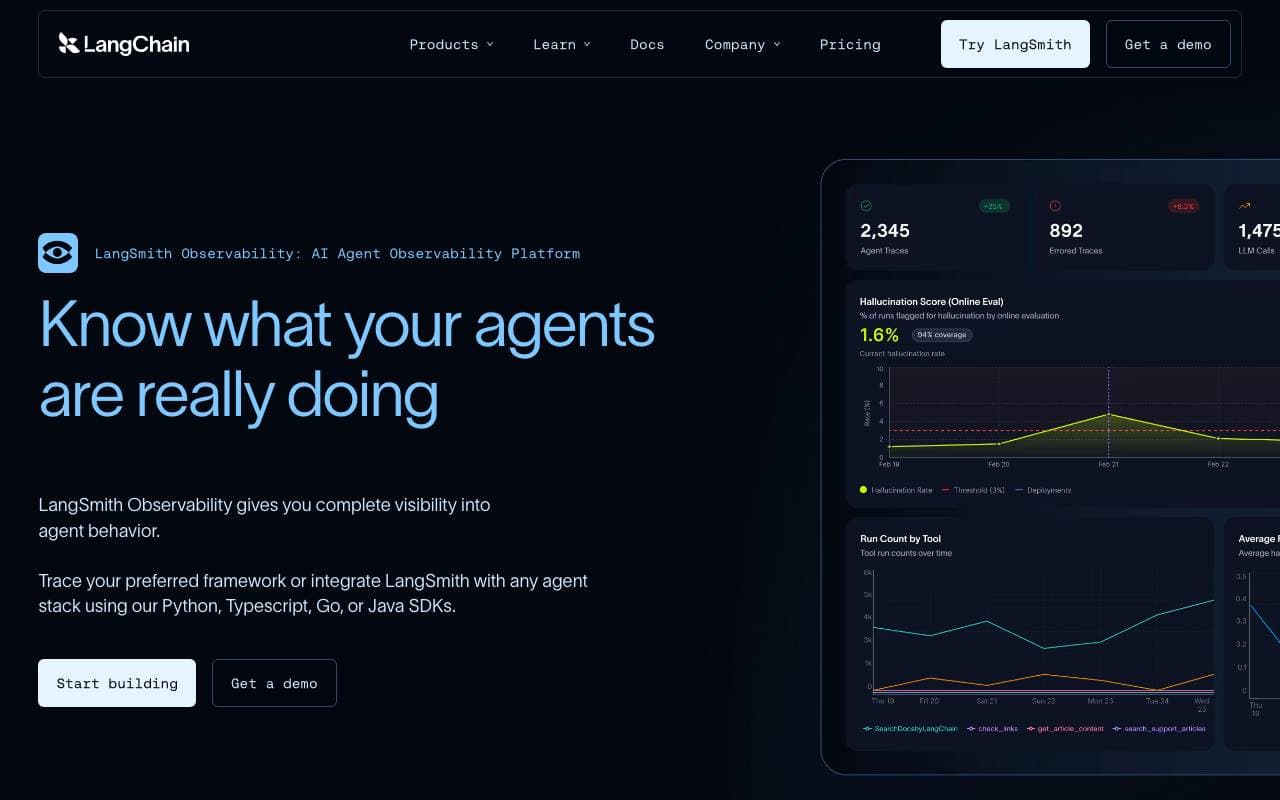

LangSmith
Agentenentwicklung
Plattform für Beobachtbarkeit, Bewertung und Fehlerbehebung für Anwendungen mit LLM aus der LangChain-Team
Trending now


Reducto AI
Plattformen für die Entwicklung von Agenten mit künstlicher Intelligenz
Intelligenter Dokument API zur Analyse, Trennung, OCR-Analyse und Strukturierung von komplexen PDFs, Präsentationen und Tabellenkalkulationen.


Biology AI
Bildung AI
Genaue Hilfe bei Hausaufgaben mit ausführlichen Erklärungen


AdCrier
Marketing & Werbung
Gepflichtete Antworten mit Provision pro Klick.

Pin AI
Arbeitsablaufautomatisierung
Agentic AI Recruiter, der Sourcing, Screening und Outreach automatisiert, um den Einstellungsprozess zu beschleunigen.